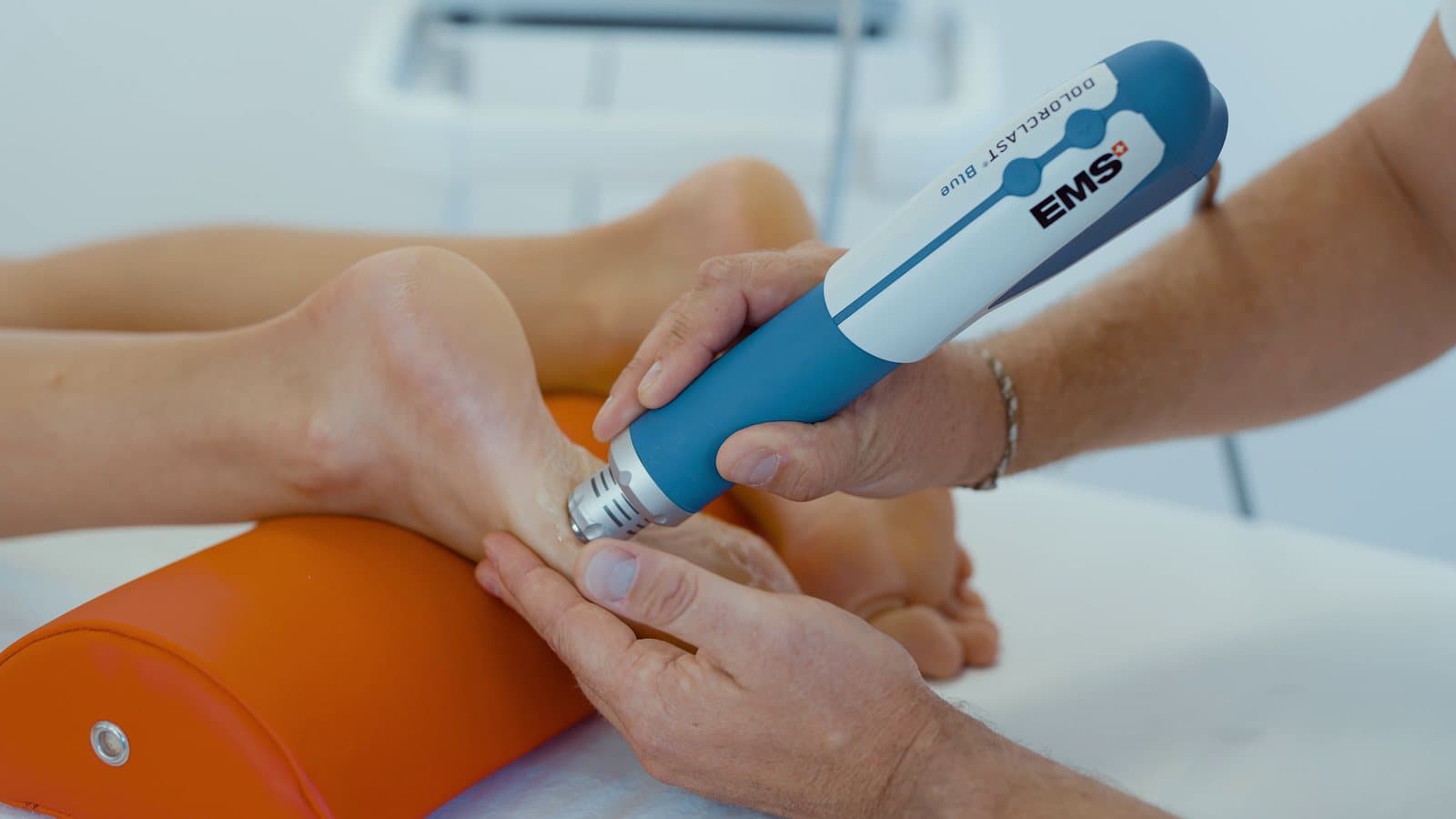

When pain does not settle with hands-on treatment alone, injection therapy can help. Our injection specialist delivers cortisone (steroid) and Ostenil (hyaluronic acid) injections, always combined with a rehabilitation plan so results last.

Your visit
What to expect
You are assessed first to confirm an injection is right for you. The injection is delivered in a 30-minute appointment, followed by a rehabilitation plan to build on the relief it provides.
No GP referral needed
Book directly with a Chartered, HCPC-registered Physiotherapist, with assessment and treatment on the same visit.
We offer two types of injection: steroid (cortisone) and Ostenil (hyaluronic acid).
Steroid (cortisone) injection
Cortisone is a hormone naturally produced by the adrenal glands during stress. Injectable cortisone is a synthetic version that closely resembles the body's own hormone. It reduces inflammation, which in turn helps relieve pain.
Cortisone injections have been used safely by orthopaedic specialists since the early 1950s to treat conditions such as tendonitis, arthritis, tennis elbow, Morton's neuroma, plantar fasciitis and carpal tunnel syndrome. They are legal and distinct from anabolic steroids used illicitly in sport.
How does cortisone work?
Cortisone is not a direct painkiller; it works by reducing the body's inflammatory response, which in turn eases pain. Injected directly into an affected area such as a knee or shoulder, it delivers a concentrated dose with relatively few side effects.
Symptom relief usually begins within a few days, although full effect may take 3–4 weeks. Benefits can be temporary or long-lasting, and injections are most effective when combined with appropriate rest and rehabilitation.
Who is not suitable for a cortisone injection?
Cortisone injections have few contraindications; however, this clinic does not administer them in the following cases:
- Joint infection
- Skin infection at the injection site
- Previous allergic reaction to cortisone injections
- Joints with prosthetic replacements (e.g. total knee, hip or shoulder)
- Pregnancy
- Current antibiotic use (unless long-term) or a flu vaccination within the past 2 weeks
Precaution: patients taking blood-thinning medication (e.g. warfarin or heparin) may still be eligible if their INR is stable.
Side effects of cortisone injections
As with any injection, side effects can occur, although they are generally uncommon.
- Bruising, bleeding or allergic reaction at the injection site
- Post-injection flare (around 2% of patients), where temporary crystallisation of cortisone causes increased pain for 12–48 hours; this usually settles with ice and pain relief
- Skin colour changes (whitening), particularly in darker skin tones; this is harmless and often improves over time
- Temporary rise in blood sugar levels in diabetic patients; monitoring is advised for 24–48 hours after injection
- Infection at the injection site (rare), minimised through strict sterile technique and by avoiding injection in those with active infection or recent live vaccinations
Ostenil (hyaluronic acid) injection
Ostenil is a hyaluronic acid-based injection used to treat osteoarthritis in the knee, shoulder, ankle, elbow and small joints of the hands and feet. It is administered into the synovial joint to help reduce pain and stiffness and improve joint function.
How does Ostenil work?
Ostenil contains hyaluronic acid, a natural component of joint fluid that helps lubricate and cushion the joint. Injected into the joint space, it helps restore the balance of hyaluronic acid, improving lubrication and reducing the effects of the wear and tear associated with osteoarthritis.
There are very few contraindications to Ostenil injections; however, in our clinic we do not treat patients in the following situations:
- Joint infection
- Skin infection at the injection site
- Previous allergic reaction to Ostenil
- Joints with prosthetic replacements (e.g. total knee, hip or shoulder)
- Pregnancy
- Current antibiotic use (unless long-term)
Side effects of Ostenil injections
As with any injection procedure, side effects can occasionally occur, although they are uncommon.
- Bruising, bleeding or allergic reaction at the injection site or to the product
- Infection at the injection site (rare), minimised through proper sterile technique and by avoiding injection in patients with active infection or those on antibiotics for an acute infection
If you have any concerns, your clinician will be happy to discuss these with you in more detail.
Conditions
What it helps with
- Persistent joint pain
- Tendon pain
- Osteoarthritis of the knee and other joints
- Bursitis
- Shoulder and hip pain