

Shockwave Therapy for elbow pain: What it feels like and how Physipro Basingstoke & Farnborough Physiotherapy clinics can help. If your elbow has been sore for months, you've probably already tried the sensible things. Rest. A strap. Ibuprofen gel. Maybe you've stopped playing squash, or started lifting the kettle with your other hand. And it's still there, a dull ache that turns sharp the moment you grip something. This is the point where clients at our Physiotherapy Clinics in Basingstoke and Farnborough often ask their Physio about Shockwave Therapy. Here's an honest answer to the questions we hear most. What is Shockwave Therapy? It's a handheld device that sends pressure waves through the skin into the sore tendon. Nothing is cut and nothing is injected, which is why many physios use it for stubborn tendon problems. The name sounds dramatic, but the sensation is closer to a firm, rapid tapping on a tender spot. The idea is that the waves nudge a stuck, irritated tendon into healing again. Chronic tendon pain is often less about inflammation and more about a tendon that has stopped repairing itself properly. Shockwave is one way of restarting that process. Which elbows is it for? Mainly tendon pain that has hung around. That means tennis elbow (the outside of the joint) and golfer's elbow (the inside), usually when the pain has lasted three months or more and hasn't settled with exercise alone. If your elbow started hurting last week, you almost certainly don't need it. Most new elbow pain calms down with load management and the right exercises. We'd rather you didn't pay for something you don't need. What happens in a session? Your Physiotherapist finds the exact tender spot, applies gel, and runs the applicator over it. A session is short, often under ten minutes of actual treatment. Most people describe it as uncomfortable rather than painful, and your physio can turn the intensity down if it's too much. Honestly, the first minute is the worst. It usually eases as the area gets used to it. Most courses involve 3 to 6 sessions, typically a week apart. Afterwards your elbow may feel achy for a day or so. You can carry on with normal life, but we'll tell you what to avoid in the first couple of days. Shockwave on its own isn't the plan. This is the bit people tend to skip over. Shockwave works best alongside other things. The tendon still needs to be loaded gradually through a proper physiotherapy strengthening programme. Without that, the pain often creeps back. So in practice we treat it as one part of the plan. Hands-on Physio, graded Physiotherapy exercises for your forearm and grip, and advice on whatever is aggravating it (your desk setup, your racket grip, a new job) all sit alongside it. How long until it helps? There isn't a neat answer. Tendons are slow. Some people notice a difference within a few weeks, but for many it's a gradual improvement over a couple of months. Anyone who promises overnight results is selling you something. Who shouldn't have it? Shockwave isn't suitable for everyone, including people who are pregnant, those with certain circulation or clotting problems, and anyone with a pacemaker, among others. Your Physio checks all of this at your assessment before we go anywhere near the device. Do I need a referral? No. You can book a Physiotherapy appointment directly. Call or text
07818 099994 or book online, and we'll see you at the clinic or, if getting out is difficult, at home. If your elbow has been grumbling for months, it's worth getting it looked at properly rather than waiting for it to disappear. A Physio can tell you whether it is tendon pain, what is driving it and whether Shockwave is right for you. Most elbows do improve, and you rarely need an injection or surgery to get there.
Medical disclaimer
This article is general information, not a diagnosis. For advice about your own symptoms, book an assessment with a Chartered Physiotherapist.
More from the blog

Neck Pain and how to fix it
Neck pain is one of the most common reasons people come to see us, at both the Basingstoke and Farnborough clinics. It's rarely dramatic. You wake up and can't turn your head to check your blind spot on the drive to work.
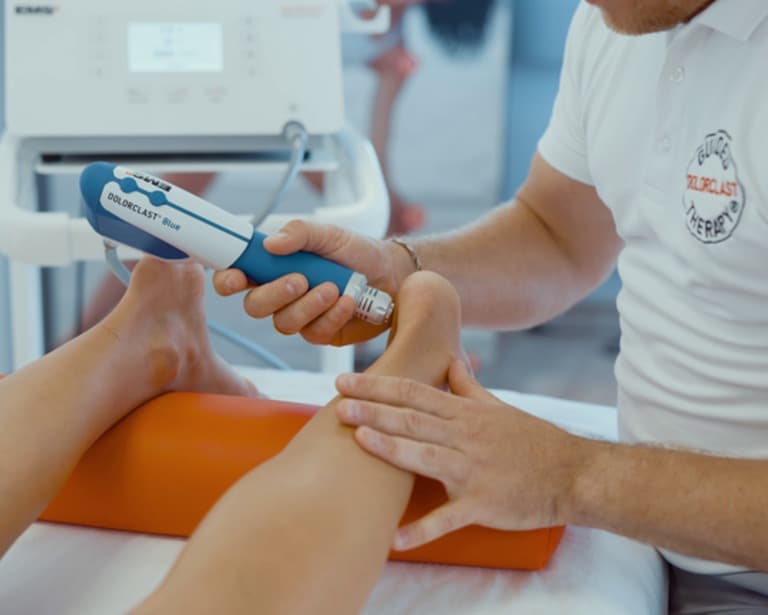
Shockwave therapy explained: how it treats stubborn tendon pain
If tendon pain has lingered for months, shockwave therapy may be the reset your recovery needs. Here's how it works and what to expect.